On Saturday 14 June at 12.30pm, Eva Doroszkowska is presenting a programme entitled Musical Moods at the Menuhin Room in Portsmouth Central Library. She talks about this concert.
The programme includes Mozart’s Sonata K310, Moods (op. 73) by Edvard Grieg, and Etudes for a Steinway with a Sostenuto Pedal by Lūcija Garūta.
It’s both quite an unusual programme and it’s not! I’ve included two very conventional composers, who are very famous names in Western music.
It’s Grieg’s birthday that weekend. So that was part of the inspiration for choosing him. I’ve chosen his very last works, the Moods, which are very much underplayed and underrated. Grieg’s title for these works is actually “Stimmungen”, which translates as “moods”. But it’s not just about moods, it’s about a kind of tuning or intonation, and about that feeling of a connection of a temperament. Mozart was also very interested in the idea of a key association and the mood of that association, which connects right back to folk music and that idea of connecting our tuning with our surroundings.
I think Grieg uses this in the sense of conjuring a different mood. These works were some of the very last things he wrote, but actually he was a bit disparaging of them. He was of course influenced by the tunings of the hardanger fiddle, which is the Norwegian folk fiddle that can have up to over 20 tunings and under strings which resonate in sympathy to the main tuning. It’s quite interesting to listen to. It’s got completely different strings to a normal violin. At the same time he starts with a very sombre resignation. It’s almost as if he knows that he’s coming to the end of his life.
And then there’s the contrast of the second piece, which is very much full of Nordic folk liveliness, a dance almost with a bit of a Slavic element to it. And then the last piece is beautiful: it’s actually the Mountaineers Song, which is again going back to the Earth and going back to nature, with that idea of “Lualåt”, but in Norwegian this is a kind of singing. It has the idea of the calling of animals and herding, of man being one with his nature and with his environment. Of course, that’s something very key to Norwegian music. That has a link to the pieces I shall play later.
And then working from that starting point, I took that idea of the moods and then linked them to the first work. Grieg had a real passion for Mozart. He had transcribed some of Mozart’s sonatas for duet version, and in fact he talked about the importance of key.
Key was very important for Mozart, and it’s very unusual for Mozart to write anything in a minor key. He wrote the D minor concerto, the C minor sonata and the A minor rondo, and then there’s one B minor andante. But there are only a handful of pieces written by Mozart in a minor key. So, when he does use a minor key, it’s obviously a very special mood for him.
I think that the A minor sonata is very insistent in its presence of that key: you never really get away from that feeling of that A minor tonality, which takes over. It’s very well known that it was written at time when he had just suffered the loss of his mother. He was very close to her, especially having had a very difficult father.
That sonata is such a fantastic work. With a lot of sonatas of Mozart’s, I think sometimes he has one fantastic movement and then there’ll be a throw-away movement where it’s almost like he’s got bored too quickly. That sonata is such a huge work and every single movement in that sonata is a real mood in itself, so that was a way of linking to the Grieg moods.
The idea of intoning and of being in a key – and that idea of resonating with a sort of harmony natural to a mood – this relates and flows through to the etudes that I’m playing by Latvian composer Garūta. In Latvian music (as with Baltic music generally) there is that calling out of those syllables that suggest herding calls.
I have wanted to do these etudes ever since I performed in the Menuhin Room last June, because that Steinway has got such a beautiful resonance with such a beautiful bass. They’re written for the third pedal, which is a unique situation: I don’t think any other pieces are written specifically for the third pedal. Of course, the piece is not just for the third pedal; it’s for the pedals in all the different combinations, but I don’t think there’s another piece with the third pedal in the title.
They’re very unusual etudes: each one takes a harmony, a kind of tuning, and that forms the basis for the piece. So there’s a kind of running theme about this idea of tuning, but not just tuning as an idea of temperament; there’s the idea of the tuning’s mood, and how that relates to the to the listener and to the player and in relation to nature.
A lot of people aren’t even aware of what the third pedal does. It’s rarely used in piano music. Even I had to discover new uses for it. You’re a little like an organist as you switch from feet to feet.
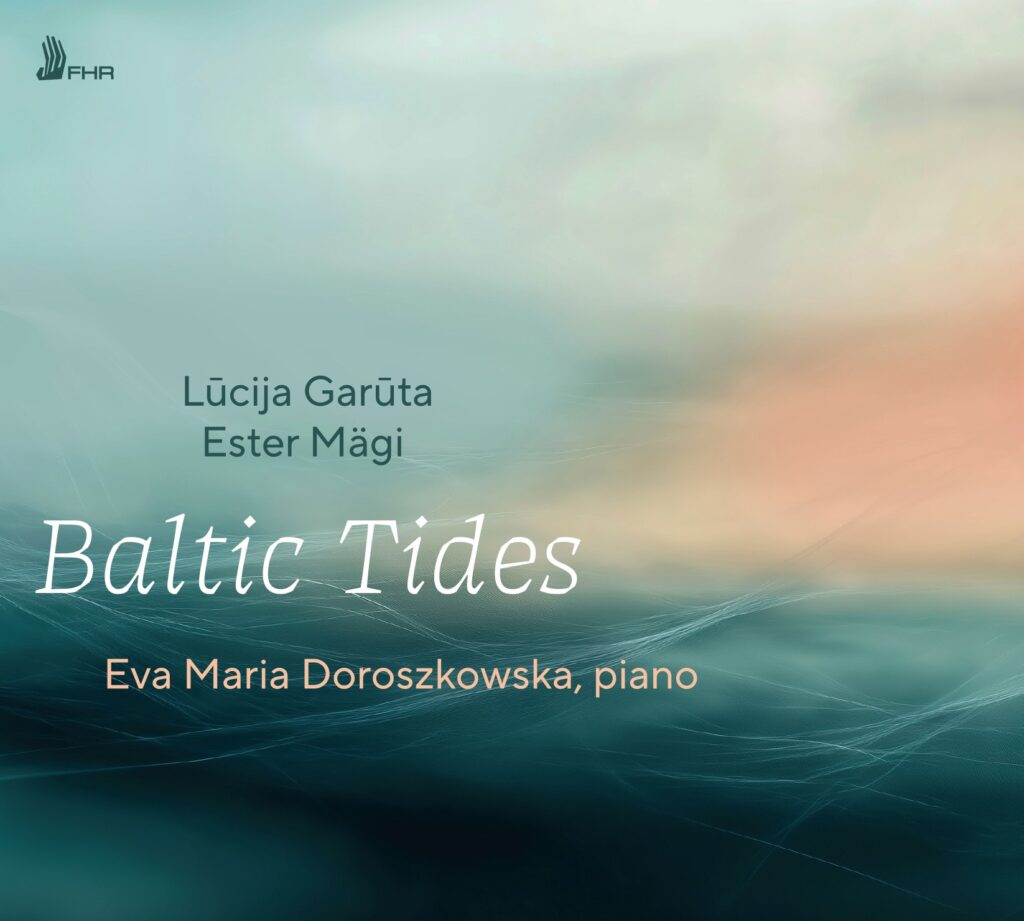
I have recorded these etudes, and they are being released on 20 June. They weren’t easy to record purely because they couldn’t be edited because of the pedals. This recording is part of a CD, entitled Baltic Tides, which is themed around Latvian and Estonian music, featuring Ester Mägi and Lūcija Garūta. These are two of the most important pianist composers of their generation. Exploring their similarities and differences is an album of virtuosic pianism that encapsulates the essence of Baltic song, a deep connection to nature and the mysterious world of Baltic folklore. Find out more at https://firsthandrecords.com/products-page/album/baltic-tides-piano-works-by-garuta-magi.
About Eva
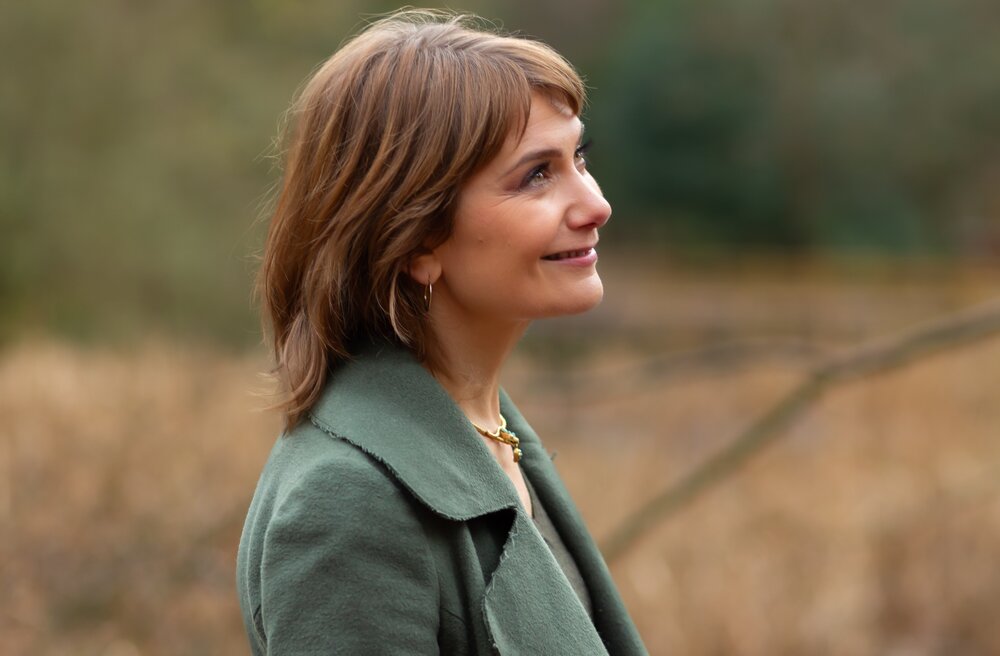
Eva Maria Doroszkowska is an international pianist. Her dramatic and colourful interpretation of the piano repertoire has earned her high acclaim. As a soloist and chamber musician she has performed with festival appearances in the UK and across Europe.
Performances include recitals at the Royal Opera House, Covent Garden, St Martin’s In the Field’s, Chopin Society, London, Holland Music Sessions, Reform Club Pall Mall and Rundetarn Copenhagen.
She has appeared at the Tivoli Mozart Festival, Copenhagen, International Prague Budapest Vienna Chamber Festival as well as many British festivals including the Edinburgh Fringe.
Televison appearances include broadcasts on the BBC and Polish TVP2.
Eva Maria has worked with composers, Gorecki and Per Norgard and has worked with the Chopin Institute in Warsaw and specialises in music from Eastern Europe. In 2023 she travelled to Estonia for an artistic residency at the Arvo Pärt Centre.
Eva is an adjudicator for the British International Federation of Festivals and freelances for International Piano Magazine with published articles in Music Education and Epta magazine. She also mentors for Young Talents Organisation supporting gifted young musicians from underprivileged backgrounds.
Eva Maria won a scholarship to study at the Royal Northern College of Music. Funded by the Countess of Munster Trust she completed postgraduate studies there winning a government scholarship to study under Professor Jasinkski at the Szymanowski Academy in Poland. She also completed her Second Phase Postgraduate studies in Amsterdam and was awarded a travel scholarship to the Royal Danish Academy Soloist Program.
https://www.evamaria.co.uk
https://www.youtube.com/channel/UC4aj0WlA2Lyi3UIZks83JIA