29 June 2025, St John’s Chapel
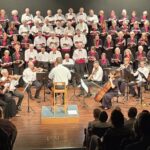
The guided stroll through Georgian Chichester that preceded The Consort of Twelve concert in the city’s 2025 Festival was gentle and unthreatening. But, as the audience in St John’s Chapel learned very soon afterwards, the Londoners who some two centuries earlier thronged across the Thames for entertainment had faced very different circumstances.
Historian David E. Coke added to the musical pleasure provided by the Consort’s ‘Excursion to Vauxhall Gardens’ by setting the 18th century scene, where the streets of the capital were dangerous and unpleasant for its residents. Hence their enthusiasm for the music and other delights the gardens provided for all who could pay the 1s entrance fee (or scramble over the enclosing ha-ha).
His words were an informative interlude in a concert that went beyond simple pleasure to broader evocation of a period that has left so much fine music for modern audiences to enjoy.
The Consort presented a varied selection by English composers, notably Handel, including more substantial works alongside light-hearted instrumental and vocal pieces that the Vauxhall audiences would have expected.
In tribute to an instrument important at the pleasure gardens, Chichester Cathedral organist Charles Harrison launched proceedings with a well-judged performance of Handel’s concerto Opus 7 Number 3, on the chapel’s newly reconstructed 18th century organ – far more delicate than the mighty machine intended for Londoners’ outdoor appreciation. Here, and throughout, Alison Bury directed the small baroque orchestra with spirit and sympathy, prompting joyful playing throughout from both strings and woodwind.
Highlights were many, including jaunty dances – the Hornpipe composed by Handel specifically for Vauxhall among them – and an Arne symphony showing off oboes and bassoon. Crucially important and so memorable was the vocal element, with mezzo-soprano Rebecca Leggett the perfect soloist in songs covering a spectrum of subjects and emotions.
It was an inspired decision to allow Leggett to close the concert with a moving performance of the ‘Ombra mai fu’ aria from Handel’s Serse, leaving the audience in awed, appreciative silence for a moment before the much-deserved applause broke out.
Liz Sagues