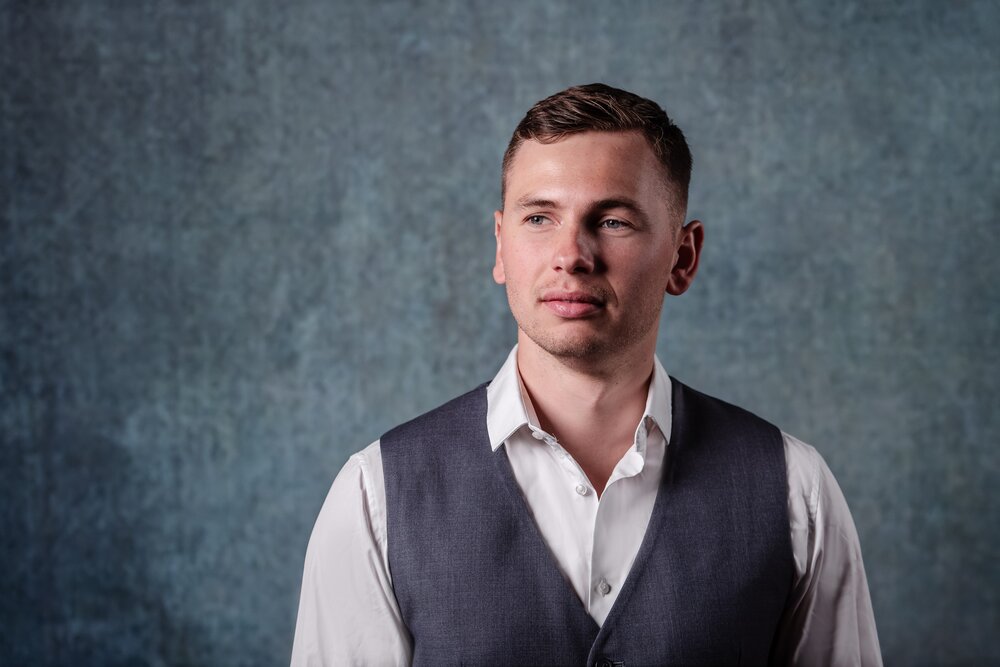
On 21 March, Redmond Sanders will be joining the Petersfield Musical Festival Chorus, comprising the Fernhurst, Petersfield and Rogate choral societies and individual singers to perform Verdi’s Requiem.
Redmond is in conversation with Simon O’Hea. In this interview, Simon and Redmond discuss Redmond’s career in opera, focusing on his musical preferences and future aspirations.
Redmond expresses a strong affinity for romantic Italian music, particularly Verdi, and shares his excitement about joining the Vienna State Opera’s Young Artist Programme in September. He explains his career trajectory, including his undergraduate and master’s degrees, as well as his current Opera School training. Redmond describes his goal of becoming well-known for a handful of operatic roles, with Rigoletto being his dream role. The conversation also touches on the differences between opera companies in the UK and those in Germany and Austria.
What are you looking most forward to when performing at this concert?
I think the Verdi Requiem has been definitely on my hit list alongside Elijah and Brahms Requiem for a very long time. And there’s that quite a famous recording (1987) of Pavarotti singing it. It’s just such an iconic piece of music. So when I saw that I had the opportunity to do it, I jumped in. I love Verdi in opera, but I’ve never sung any of his oratorio pieces before.
As I am still a student, I don’t yet have full control over what I sing. I’m on a course with many singers, so opportunities depend on the casting. Verdi, in general, is suited to the slightly more mature singers that have technical prowess. I’m just starting to explore that kind of repertoire, even if it’s just in the studio. That romantic Italian music by Bellini, Verdi and others is the kind of music that I want to be singing.
When you say technical prowess, what do you mean? Is it because it’s just challenging to sing or to communicate? What is it about the Verdi that makes it technically challenging?
In general, the orchestration is heavier. This requires quite a lot of technique in order to carry over the orchestra effortlessly. The way in which Verdi writes, with long legato and beautiful lines, means that you need to keep the voice open and constantly resonating throughout your whole range through the whole line.
It just takes a while to build that muscle coordination and get that pure beauty in the voice. Quite often you’ll have an orchestration playing arpeggios underneath and you’re the one doing all the noodling and making all the beautiful tunes over the top. The very nature of that music means that people search for a really beautiful instrument that can project really well and is very even and consistent.
The on-the-day rehearsal will involve going through the balance, and going through the tempos with the Maestro and Maestra. One needs to be well prepared.
What are you working on at the moment?
I’m doing Owen Wingrave by Benjamin Britten at the moment. Britten is such a complex composer. For me, it always takes quite a long time to really get into his sound world, and then you say, “wow, this is genius.” But initially, it just feels like a bit of a mess of sounds: it’s like learning a new language, and then suddenly it all makes sense.
I know Maddie Perring, the soprano in this concert. We did our undergraduate studies together at the Royal College of Music. Then she went on to the Royal Academy of Music, and I went to the Guildhall School. We’re both Drake Calleja Trust scholars this year, so we’ve done a couple of performances together. It’s so nice to meet up with old friends. It’s funny how small a world it is.
What have been the most important influences on your musical career?
Two years ago, I was fortunate enough to be at the Verbier Music Festival. I sang the role of Antonio in The Marriage of Figaro alongside a very starry cast.
They put on a three-week music festival every year. They have a small young artist programme called the Atelier Lyrique, which I was part of. Singers sometimes get the opportunity to do a small role in their main opera. It was amazing to be alongside those artists, who travel around the world doing opera all the time. It was interesting to see how they were giving it their all on one evening, and then they could get up the next morning and do it all again. Whereas I’d come off the stage having really committed to a role, but I’d be tired and it would be quite difficult to do it the next day with as much energy.
Those people had absolute effortless sound production and effortless characterization. Opera might not be cool to the man in the street, but these people are like Olympic athletes. It’s quite a force to behold when you’ve got someone making so much beautifully loud sound.
I did the gold medal competition last year in May at the Guildhall School, and I was a finalist. That included singing half an hour of my favourite repertoire to a pretty full audience in the Barbican Hall. That was the first time that I’ve done proper soloistic singing with a full orchestra in a large hall. The sensation of simply filling a space and singing your favourite repertoire with the support of a large orchestra is absolutely exhilarating. There’s no better feeling!
My idols probably are Bryn Terfel or Dmitri Hvorostovsky. They were competing in the Cardiff Singer of the World Competition (the BBC opera singing competition) in around 1989, which you can find on YouTube. They coined it “the Battle of the Baritones.” It’s absolutely phenomenal to watch those them: they were young – around 24 and 28 respectively, and they were just absolutely rocking it. To see people with so much charisma and like personality on stage is amazing.
There’s a lot of people taking about “holding on” in opera. “Oh, don’t sing things until you’re ready” and all of that. I’ve got some time, but no time to waste. It’s a funny career because you’re a young artist, and then suddenly overnight you become an opera singer: there’s quite a hard market between being young and not singing the roles and the repertoire as yet – because you need to do more developing. And then suddenly everyone’s asking, “have you done this and have you done that?” It’s amazing to see young singers my age absolutely on fire and singing amazingly.
Initially, I didn’t really want to be an opera singer, as I didn’t think there was a “real” career in opera singing. I wanted to be a mechanical engineer; my sister loves choral singing, and dragged me along to choir when I was around 16. The choirmaster said, “you need to go and get singing lessons or you’re getting kicked out of the choir, because you’re too loud and the sound that you’re making is not very nice.” But that was a mistake on his part because I went to get singing lessons and I only got louder! Maybe I became slightly more refined.
That was how I started singing. It was quite late on, and I’ve always seen it as a passion or as a hobby rather than as work, which I think has been really valuable as well, because I never formally studied music in my earlier years. I only did this when I went to the Royal College of Music when I was 19.
Which works do you have a special love of?
I really feel an affinity for romantic Italian music, although I haven’t done very much of it. I’ve done a lot of Mozart, and I’ve done a little bit of Handel: those are works that young singers tend to do. I’ve only just started having a look at bel canto music – slightly more romantic Italian music, of which Verdi is at the latter end of, and I simply adore it. There’s a sensation that the voice is the driving texture in the sound. It’s a chance to show off a little bit with your voice and show how beautiful it can be.
It’s great when you start getting a lot more coloratura, in other words fast notes and decoration. There’s quite a tradition with cadenzas – little bits of decoration towards the end of the piece. Every singer traditionally used to have their own cadenza. And now they’re written into music. They’re either a famous singer’s cadenza or a cadenza that was done most frequently. But actually, you can do whatever you want there. So if you’ve got a really good top note, then you can work a really good top note in. Or if you’ve got a really strong bottom note, then you can go all the way down in the scale. You can show off whatever parts of your voice you love best.
That kind of music is freeing: your voice is really attached to your soul and your sound. Your breath is free. You’re just open and you’re making a noise, which I find really freeing.
Just before Christmas I accepted a place on the Vienna State Opera’s Young Artist Programme, so I’m going to Vienna in September for two years to be a young artist, there which I’m really looking forward to. You get off the plane in Vienna, and can already hear some opera being played in the airport – it’s truly the home of opera.
There’s so much more work in Europe. There’s a real aesthetic in an English garden opera, in the summer, and it’s lovely to wear a black tie and have a picnic at Glyndebourne or Grange Park or Garsington Opera. The issue is that for a singer that’s trying to work, these events only run from June to August. And aside from that, in the UK there’s only a handful of companies that work all year round. Whereas in Germany and Austria, there’s far more work. I don’t feel like I have to live in the UK, and am very happy to follow the work for a bit.
My dream is to get well known at a handful of operatic roles. My absolute dream is to be a popular Rigoletto from Verdi’s Rigoletto, because the main role is a baritone. My dream would be just to be essentially on call for any last-minute performances of Rigoletto around the world. I would love the idea of being in one place for a week or two, doing five performances of Rigoletto and then flying out to a different place and doing it all again. It would be great to have a trademark Rigoletto, like Bryn Terfel has a trademark Gianni Schicchi that he does all around the world. I’d love a Rigoletto or the Count or Don Giovanni baritone role.
Baritones have it hard when it comes to oratorio. Actual basses are quite rare anyway. A lot of us men are more “baritonal”. It’s rare to get a really high tenor and it’s rare to get a proper bass. So most of the time we sit in the baritone area.
I am currently at the opera school to get an advanced certificate. We do opera performances every single term, which helps with the CV. They run it more like a proper opera company. In this way one gets a real good sense of how it feels to be working in an opera company. You experience singing with an orchestra and dealing with a conductor. We get guest directors in, so also you have to deal with the different style of directors.
The main thing that I’ve learned is how to prepare music. If you have a little question mark in your head on the first day of rehearsals when you don’t know the music, you know it’s going to be really difficult to commit to the work. But you should have a good time, which is the most important thing: if you’re having a good time, then everyone else is having a good time. You put on a good performance and then the audience has a good time, which is the most important thing.
About Redmond
https://www.redmondsanders.com/about