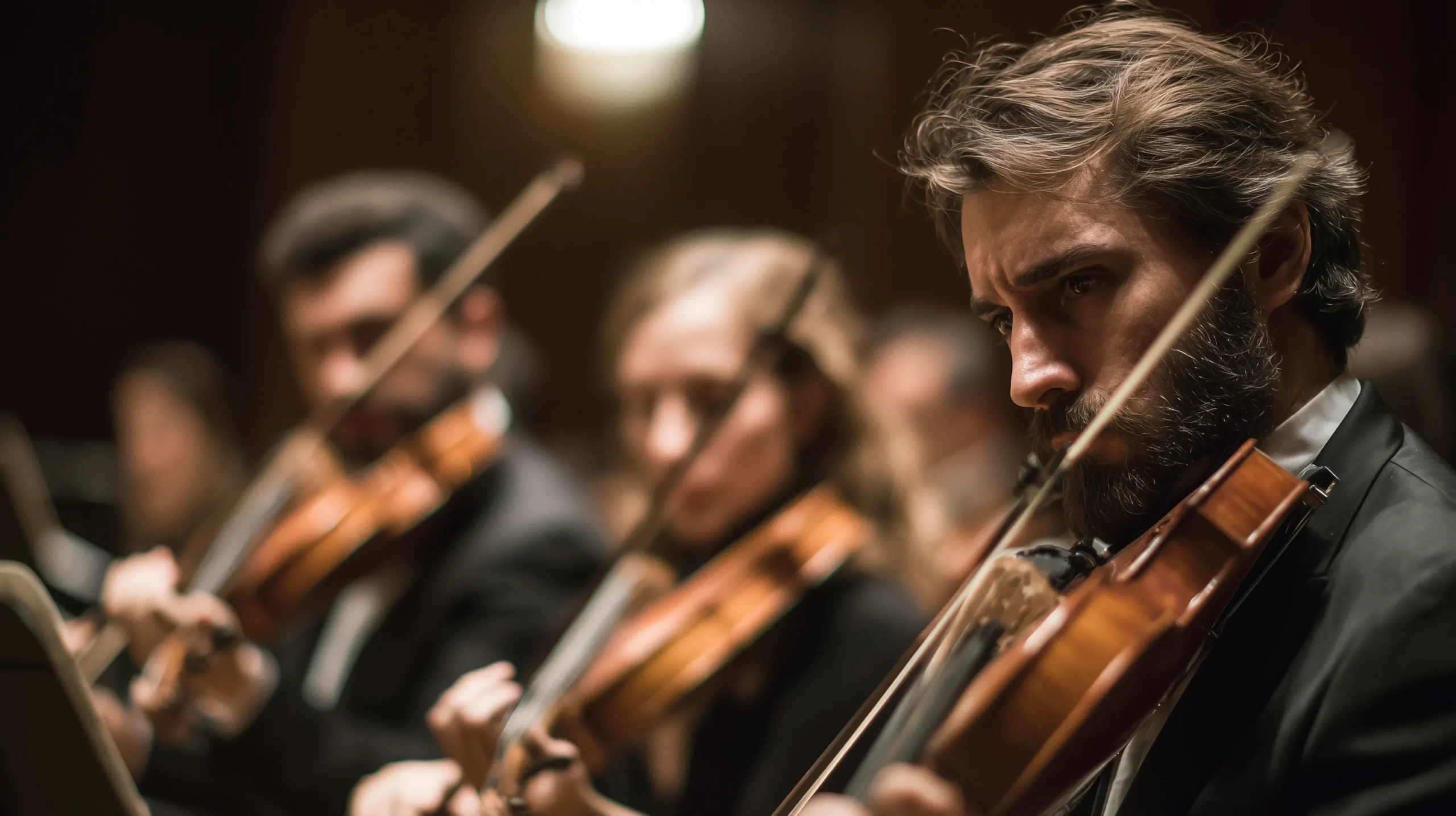
On Saturday 28 March the Chichester Singers with Southern Pro Musica is presenting “Great Classics” in Chichester Cathedral, a concert featuring Haydn’s Maria Theresa Mass and Mozart’s Requiem.
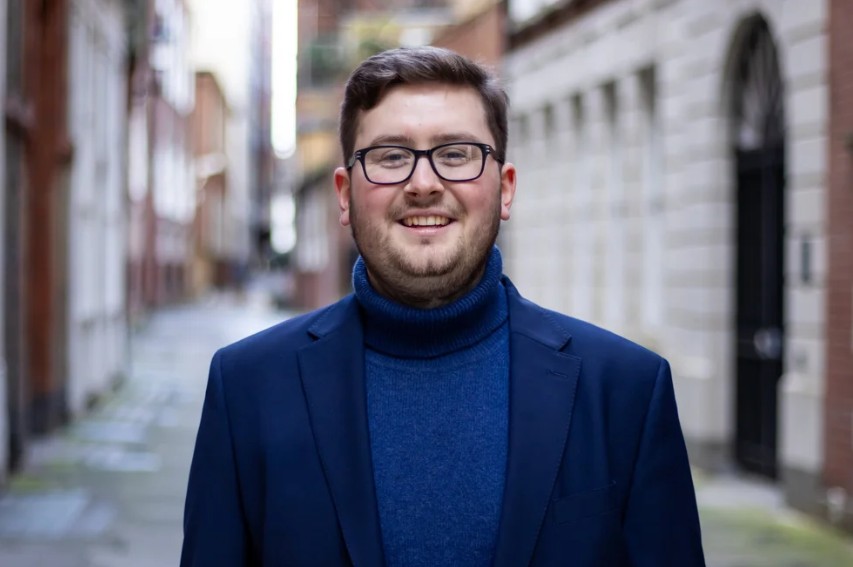
Simon O’Hea is in conversation with Thomas Butler, bass.
Tom discussed his role as a bass soloist in both pieces, his preparation process, and his experience with oratorio singing at the Royal Academy of Music, where he is completing his fourth year of studies. Tom’s described his interest in Russian Orthodox church music and his career aspirations, including his current position at Westminster Abbey and future goals in solo performance.
Tom
I’m looking forward to coming to Chichester. I’m the bass soloist in both of those pieces, among a quartet of soloists.
The Requiem is an absolute classic, and I’ve done it quite a few times before. It’s a piece that exists in the audio memory of lots of people that will be coming to the concert. Many people have probably seen the film Amadeus, or the new adaptation of the play Amadeus, which recalls the Requiem because it focuses on when he died.
It’s a wholly different experience performing a piece that the audience is able to engage with much better because they already know it. You can tell when the audience are enjoying it because they know what’s coming next, and that’s really fun. The famous bass piece is the Tuba mirum (Latin for “The trumpet, scattering a wondrous sound”) where I sound a bit like a trombone. I think Mozart’s probably being a bit funny in the way he’s written some of that. There are some really dark moments in the piece, but there are also some places where, in classic Mozart style, he’s able to really give some lightness as well.
The Haydn is quite often programmed together with the Mozart. It has a lot of contrasting energies: there tends to be sections which are choral and sections which are solos and they quite often swap between one and the other within a movement, whereas Mozart more so has a whole movement which is a solo and a whole movement which is choral. That creates quite a different dynamic as a performer.
It’s quite nice in the Haydn that there’s going to be moments where I’m singing a line and then a couple of bars later the chorus will be singing echoing that line in some way or responding to it.
There’s a different sense of the drama, because I am the interlocutor with the choir – the interplay brings a different dramatic energy.
Simon
How you’re going to have to approach these works? Are they big pieces to sing?
Tom
For someone with my particular vocal range, these pieces are pretty safe – they are not at the extremities of the range. By contrast, in Haydn’s Nelson Mass the soprano has to just do these absolutely astronomical high bits and really difficult runs, and the bass gets off quite easily with just some nice low bits. With the Mozart Requiem it is a bit trickier than it sometimes looks on the page.
The other element with regards to preparing for it is that you’re going to be singing in a quartet with three other singers whom you may not have sung with before. For this concert, I do know them, but I haven’t sung with them before. There’s usually not much time on the day to put it together. So you’ll have usually a go or maybe a couple of goes through it. And then you’ve got to try and find a groove between all of you where that makes sense and makes the most of the music. So if occasionally we’re able to get together beforehand, that’s always quite helpful.
I am supported by the Josephine Baker Trust, an amazing scheme: it genuinely makes a huge difference for people at my level. It funds half of the fees for soloists, and the other half comes from the choral society. It essentially allows choral societies to be able to afford good quality soloists. And it also means that the soloists are being paid a fair fee – better for everyone in the business.
Because I’m now in my 4th year of being at the Royal Academy and about to leave, I won’t be on this scheme any longer. However I’ve had four years of considering this kind of scheme to be the gold standard of what the fee structures should be for this work and what’s expected of it.
I’m quite used to oratorio work because I grew up with a choral background and did lots of singing in choirs. Lots of the people that I study with now are much more opera focused and grew up with opera and they’re very comfortable on the stage. But then once you give them a score and you tell them, “just like you’d sing an opera, but hold the score and look at the audience, in wearing black tie”, it’s the most scary thing you could possibly say to them. That’s why at RAM we have oratorio classes which are about trying to get people comfortable with that form of performance.
It’s genuinely something that performers can find quite alien, even though it really is just as performative. The process for preparing for this kind of role is very similar to preparing for an opera role, but it’s just that you don’t necessarily have to learn it off by heart.
I didn’t expect that when I arrived at Academy, I would be in a class that really frightened people! The thing that frightens me is doing my French class. I find it really difficult. But for some people, it’s really out of their comfort zone. Luckily, the Josephine Baker scheme is really good for getting people used to this kind of performance.
Simon
Do you have any composers whose works you particularly like performing?
Tom
I grew up with a choral background. I was a chorister and so I always have had quite an interest in choral and church music. And that drove me to an interest in traditional Russian Orthodox church music: I love the lowest bass voice, which is quite different to my voice – these voices are sometimes known as the Russian octopus voice.
Russian choral singers deliver in a very different way to British ones: there’s much less obsession with precision about tuning and things. It’s more about the colour in the sound that they make. I am fond of composers such as Chesnikov and Rachmaninov, whose All Night Vigil (Vespers) is probably one of my favourite pieces to sing, even though there’s no solo element in it. It’s got a different sound world, and it’s lovely for the low voices, because they have such a big impact on the overall experience.
I started singing opera as a child at Blackheath Hall’s Community Opera, where they do lots of really good community opera. I was very lucky to be involved with it. And now my course at RAM is specifically an operatic course. So Verdi and others like him inspire me now.
Simon
Is there any advice you’d like to give to those who are considering a career in music from what you’ve learned about where you are?
Tom
It’s not an easy path to follow. I think that’s it’s very important to recognise that one has to be practical about one’s career. It’s a brilliant thing to do, and if you can make it work, then singing as your job is a fantastic thing. And I’m very fortunate that I have a day job now singing in the choir at Westminster Abbey. This provides me with a really nice basis of work.
So, my advice to young people interested in getting into singing as a profession would be, don’t be afraid to have a portfolio career, and try your best to not put all your eggs in one basket. Teaching is always something that’s good to be able to do – you learn a huge amount from teaching others. And then there’s obviously just the pure performing part. If you’re going to be a singer, particularly being able to perform, being able to sight read music, or being able to perform chorally is a really useful skill to have.
In the UK, there’s a lot of choral work up and down the country, and especially in London. But most of the people that come up through conservatoire courses now, especially starting as undergraduates, aren’t really taught these kinds of skills. So it’s something you have to take upon yourself because conservatoires are built mainly for singers and around opera where you wouldn’t need these skills as much.
The classic trajectory of someone going through a conservatoire in this country is you do the undergrad and the masters, maybe you do a bit of further training in opera school or something like that. And all of that training is focused on opera and specifically on how to do a good audition. And then after you audition, you find that no one stays in the UK, as it’s very difficult to sustain an operatic career in the long term in the UK. I have lots of friends who are regularly auditioning in Germany, where they simply have many more opera opportunities. They have over 200 houses where there are young artist schemes. And so most people are trying to go on to get onto one of these schemes.
So that’s I would that’s the other advice I would give to someone who’s considering singing would be if you want to do opera, really try and question from an early point whether you are comfortable moving countries. And I changed my mind about this, especially now I’ve got a slightly more stable life that’s here in London.
I think having a portfolio of skills within singing is a really good option because then you’re not trapped into one thing which might not actually work with the other factors of your life. But I’d highly recommend it – it’s brilliant.
Simon
What would you like to be doing in five years’ time?
Tom
I’d like to still be in the job I’m doing right now at Westminster Abbey. And to have built up my profile as a soloist in that time, so that in five years’ time I would be doing some bigger work. I’m as a soloist in an opera later this year at Blackheath Halls, returning to where I performed as a child, which is very exciting for me. I’d like to be doing roles in places like that in the UK, as well as abroad, for instance in the Netherlands where there’s lots of good concert work. And I’d also like to be singing in some competitions and hopefully getting some acclaim from that. The idea for me is simply to keep seeking out new singing opportunities and building up the profile of my name as a soloist so that people hopefully seek me out, rather than me seeking them out.
About Tom
Tom Butler read Music at St John’s College, Cambridge, and is currently studying in the Royal Academy Opera School at the Royal Academy of Music, where he studies under Mark Wildman and Iain Ledingham.
Tom’s operatic engagements include performing various roles in an Opera Gala at Château de Panloy, France with Westminster Opera Company (2024), and at Ryedale Festival where he sang Adonis in Blow’s Venus and Adonis. In 2025, Tom performed as Escamillo in the Royal Academy of Music’s production of Bizet’s Carmen and as the Herald of the Courtiers in Britten’s The Burning Fiery Furnace. In Royal Academy of Music opera scenes, his roles have included Wozzeck in Berg’s Wozzeck, Marcello in Puccini’s La Bohème, and the Count in Mozart’s Le nozze di Figaro. Other appearances include Eisenstein (Strauss, Die Fledermaus) with the Cambridge University Opera Society (CUOS), Figaro (Mozart, Le nozze di Figaro) and Achilla (Handel, Giulio Cesare) with the Trinity College Music Society, and the Twin Brothers (Schubert, Die Zwillingsbrüder) with CUOS.
Tom presented a recital of Brahms songs and duets at Ryedale Festival in 2024 accompanied by Christopher Glynn and singing with Caroline Blair. A keen performer of contemporary music, Tom gave the world premiere of a new song cycle by composer Tim Watts at the Our Place in Space Festival. Tom has been the recipient of various awards, including the Michael Head Song Prize (2025), the Postgraduate Vocal Prize at the Royal Academy of Music (2024), the Donald Wort Prize at Cambridge (2021), and First Prize in the Clare College Song Competition (2021). Both the Postgraduate Vocal Prize and Donald Wort Prize were awarded for attaining the highest final recital mark in his year at each institution respectively. He was also a finalist in the Richard Lewis Competition (2024).
His concert work includes recent performances as a soloist with the Orchestra of the Age of Enlightenment and the Bruckner Choir in Bach’s Mass in B Minor at St John’s Smith Square (2025), Haydn’s The Creation at the same venue (2024), Handel’s Messiah with the Academy of Ancient Music at Westminster Abbey (2023), and Brahms’ Ein deutsches Requiem with the Bournemouth Symphony Orchestra at Christchurch Priory (2023). He has also appeared as a soloist with the Choir of King’s College, Cambridge at the Concertgebouw in Amsterdam.
Tom’s notable performances at Cambridge include his role as a soloist on Magnificat 3 with St John’s College Choir, and on the recording of Chesnokov’s All-Night Vigil with St John’s Voices. He has also appeared as a soloist with St John’s College Choir on BBC Radio 3 and 4 broadcasts.
Tom is a Lay Vicar in the choir of Westminster Abbey, where he performed for the Coronation of His Majesty King Charles III.
Visit his website.